
The Wave of AI Applications: An endless pit of copy & paste resumes and cover letters

Have you recently posted a job ad, started reviewing applications, and thought, "This looks like the last five resumes I just read", or "No one actually writes like this"?
You're not imagining it.
With AI tools like ChatGPT becoming more accessible, job seekers are increasingly using them to write resumes, cover letters, and applications. The result? A growing pile of applications that look polished‚ but unfortunately all sound the same.
Which raises a few real questions for businesses that are hiring at the moment:
How do you assess quality when everyone looks identical on paper?
How do you know the experience and skills are actually theirs?
And are resumes slowly becoming a tick-box exercise?
How to Spot AI-Heavy Applications?
Firstly, let's be realistic. AI is incredibly useful; it saves time, improves structure, and helps with clarity. So, you can see its appeal to job seekers wanting to use it. But when it comes to showcasing personality, experience, and real capability, it can flatten everything into the same generic voice. If you're not hiring regularly, it can be hard to pick up on patterns. But after reviewing a handful of applications, a few signs might start to stand out to you:
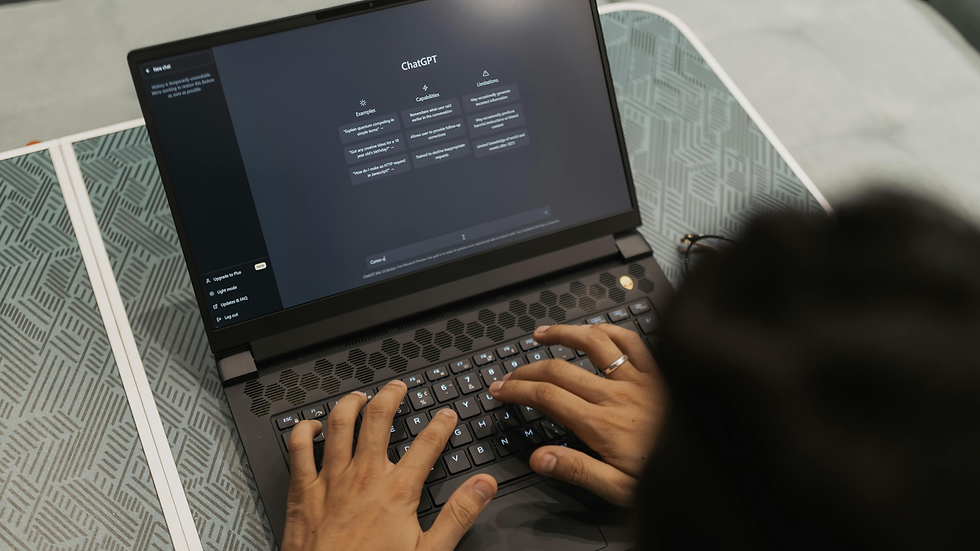
Heavy AI usage in resumes or cover letters often has:
Overly formal, unnatural and robotic language
Generic statements that could apply to anyone
Overuse of buzzwords and cliches
Polished content with very little substance
Overcomplicates simple tasks
Makes everyone sound equally "impressive"
Lack of specific examples or measurable achievements
Repetitive phrasing across multiple applications
Formatting quirks like bolded headings with colons or inconsistent styling
If you're in Australia, the use of American spelling can also be a sign
There's nothing wrong with using AI as a tool. However, when every resume looks "perfect on paper," it becomes harder to identify who is actually a great fit for the role and company. At that point, it becomes harder to tell who actually has the skills‚ and who just knows how to prompt well. Some candidates use AI well, refining and personalising what it produces. Others rely on it entirely. That's where the risk sits.
The real challenge and questions on hiring managers' minds: what's actually real?
Here's where it gets tricky‚ If AI is helping write applications, how confident are you that what's on the page truly reflects the candidate's real experience? Did the candidate actually do what's written, or has AI added a bit of "mayo" to the story? Can they perform the role without relying on AI day-to-day?
All of these questions begin to put doubt into the hiring manager's mind, where you're no longer just assessing experience, but you're also assessing authenticity.
Beyond that, you may also want to assess their:
Writing ability
Attention to detail
Ability to think and work independently without technology to solve issues
These are all critical skills‚ and they're hard to measure if AI is doing most of the work upfront.
Why Interviews Matter More Than Ever
As AI becomes more embedded in applications, the interview process becomes even more important. This is where you move beyond the script and get a real sense of the person.
We always say a resume might get someone in the door, but an interview shows you who they really are. If anything, interviews are becoming more critical in an AI-driven world, not less.
Here are our recommendations on how to get the most out of an interview:
Use the STAR method - Get candidates to explain the Situation, Task, Action, and Result. It's much harder to fake real examples.
Ask scenario-based questions - See how they think and approach real-world problems.
Test technical knowledge - Go beyond surface-level questions and dig into their experience.
Run reference checks properly - Ask about attention to detail, technical ability, and how they actually work day-to-day.
Avoid yes and no questions - you want the prospective candidate to go into detail and elaborate on their answers; this is where they show both technical hard skills and soft skills
Don't be surprised if practical assessments start making a comeback, too. Yes‚ even typing tests to help assess their true knowledge and abilities.

Are resumes becoming a tick-box exercise?
Resumes still have a place. They're a useful starting point to understand someone's background, skills, and experience. But they're no longer the full picture and certainly not enough on their own.
Through the years, hiring processes have been adapted with technology, e.g., video applications or Zoom interviewing, and the process will forever be evolving. What won't change, though, is the need for real human interaction.
At the end of the day, you're hiring a person, not a perfectly written document, so take the time to get to know them and how they fit into your business and team beyond skill level alone.
AI is here to stay, but hiring is still human at its core...
AI isn't going anywhere, and used well, it's a powerful tool that businesses need to learn and adapt to. But in recruitment, it should support the process, not replace it. Right now, we're seeing a wave of polished applications, which are often lacking individuality.
So the question is: Is using AI in job applications smart, or does it remove the very thing employers are trying to assess? The reality is, it's a balancing act.
For businesses, the focus needs to shift toward verifying real skills and experience, asking better questions and prioritising human interaction in the hiring process because, at the end of the day, hiring is still about people, not just what's written on paper.


Comments